
Loft Bed vs Bunk Bed for Kids: Which Saves More Space?
Loft Bed vs Bunk Bed: The Best Space-Saving Choice for Growing Kids
If your child’s bedroom feels smaller every year, you are not imagining it. Between the toy collection, the school bag pile, and the ever-growing bed, floor space disappears fast. That is why so many parents end up weighing the same decision: loft bed vs bunk bed for kids. Both lift sleeping space off the floor, but they solve very different problems. Here is a clear, parent-friendly comparison to help you choose with confidence.
What Is the Difference, Really?
At a glance the two can look similar, yet their purpose is different.
A bunk bed stacks two sleeping surfaces, one above the other. It is built for two children sharing a room, or for one child who loves sleepovers.
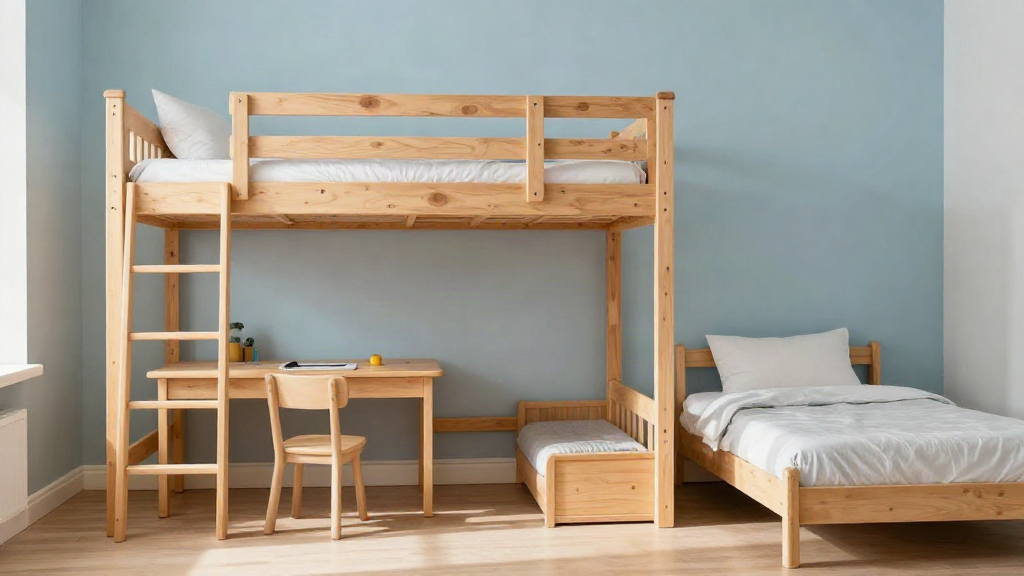
A loft bed raises a single bed higher off the floor to free up the space underneath. The open area below becomes a desk, a reading nook, a play corner, or extra storage. It is built for one child who needs more usable room, not another mattress.
So the simplest way to frame it: a bunk bed adds sleeping capacity, while a loft bed adds usable floor space.
Footprint and Vertical Space
Both options reduce the amount of floor a bedroom needs for sleeping, but they use that savings differently.
Bunk beds are typically longer and wider than a single, because two full sleeping surfaces sit within one footprint. They shine in narrow or long rooms where length is available but floor area is not.
Loft beds keep a single-wide footprint but push the sleeping surface upward. That means you need decent ceiling height, ideally at least a metre of clear space above the top of the mattress, so a growing child can sit up comfortably and you can move around underneath.
Quick rule of thumb: if you have width but no floor area, think bunk. If you have height and need a multi-purpose zone, think loft.
Safety and Age Suitability
This is where parents rightly slow down, and where the two options genuinely diverge.
Bunk beds suit slightly older children. As a general guide, the lower bunk works well from around age six, while the top bunk is best reserved for children aged six and up who can climb safely and follow house rules. Guard rails on the top bunk, sturdy ladders or steps, and a firm mattress that sits below the rail line are non-negotiables.
Loft beds split into two types. The taller models carry the same top-bunk safety advice, so they are usually best from around age six. Lower loft beds, sometimes called mid-sleepers, sit closer to the ground and can suit younger children who still want a cosy nook below.
Whichever you pick, check that the frame is stable, the rails are solid, and the weight limits match your child. Adult assembly and supervision matter, and a wall anchor or anti-tip strap adds peace of mind.
Comfort and Sleep Quality
Children sleep better when their bed feels secure and personal.
A bunk bed gives each child their own level, which can feel like a private little den. The trade-off is that the upper bunk can get warmer, and the lower bunk can feel enclosed. Good airflow and a breathable mattress help.
A loft bed keeps the sleeper at a single, familiar height relative to the room, which many kids find calmer. The space underneath, though, is the real draw, especially for a child who wants a homework station by day and a hideout by night.
Which Room Suits Which Bed?
Here is how it usually plays out in real homes.
Choose a bunk bed when:
- Two children share one bedroom
- Sleepovers happen often
- The room is long and narrow rather than tall
- You want two full beds without adding furniture
Choose a loft bed when:
- One child needs a bedroom that does homework, plays, and sleeps
- Floor space, not ceiling height, is the bottleneck
- You want to fold a desk, shelves, or a play zone into the bed itself
- Your child is ready to climb safely and would love a raised den
Practical Setup and Storage Considerations
Before you buy, measure twice. Note the room’s ceiling height, the door swing, the window position, and any ceiling fan or light fitting that a raised bed might crowd.
Think about the ladder or stairs. Will they sit on the side that keeps the doorway clear? For young children, wider steps are easier and safer than a steep ladder.
Then plan the space underneath. A loft bed rewards you most when that zone has a job: a slim desk and chair, a row of storage cubes, a beanbag and a bookshelf, or a small play rug. Without a plan, it quietly becomes a clutter trap.
Finally, consider the future. Children grow, tastes change, and a bed that adapts, with detachable desks or a convertible frame, often outlasts a fixed design. Durable, well-made frames that resist wobble are worth the investment, because a kids’ bed takes a daily beating.
The Bottom Line
There is no single winner in the loft bed vs bunk bed debate, only the right fit for your home. If you are squeezing two sleepers into one room, a bunk bed earns its place. If one child needs a bedroom that does more, a loft bed turns a single mattress into a whole activity zone.
Whichever route you take, prioritise safety rails, sturdy construction, and a mattress that fits properly. Get those right and you will have a space-saving setup that keeps kids comfortable and parents relaxed for years.
Shopping for the next step? Explore Kidz Heaven’s range of kids’ bedroom and play furniture for quality, family-friendly options built to grow with your child.
Leave a Reply